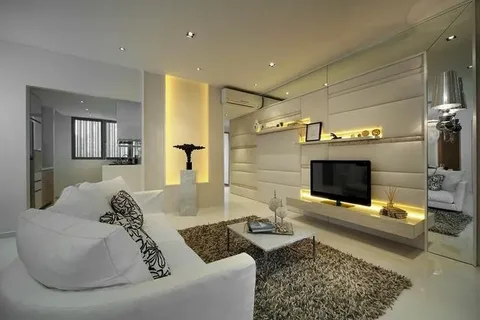
Walking into a well-lit home in Singapore feels different. The light hits the right corners, shadows disappear, and suddenly your living room looks twice as spacious. Many homeowners rush into furniture shopping but forget one critical element that changes everything: home lighting. In a tropical city like Singapore, where natural light can be harsh during the day and scarce after sunset, getting your lighting strategy right is not just about aesthetics. It is about functionality, mood, and even energy savings.
The challenge with home lighting in Singapore is unique. Most HDB flats and condominiums have fixed ceiling points, limited natural ventilation, and compact layouts. Without a proper plan, rooms can feel cramped, gloomy, or uncomfortably bright. But when you layer your lights properly, even a small apartment can feel open, inviting, and luxurious. I have worked on over 200 residential lighting projects across Singapore, and the number one mistake I still see is people buying beautiful lamps without understanding where shadows will fall or how color temperature affects their space. Let us fix that.
Before you buy a single bulb, understand this: good home lighting Singapore style uses three layers. Ambient lighting gives you overall illumination. Task lighting helps you read, cook, or work. Accent lighting highlights art, plants, or architectural features. Most homes only have ambient lighting. Adding the other two layers is what separates a basic flat from a beautiful home. Throughout this guide, we will cover everything from LED choices to smart controls, and by the end, you will know exactly how to light every room in your Singapore home.
Understanding Home Lighting Basics for Singapore Homes
The first step to mastering home lighting in Singapore is understanding your limitations and opportunities. Because most residential properties here come with pre-installed lighting points, you cannot always move wires easily. However, you can work around this with plug-in fixtures, track lighting, and smart bulbs. The key is to plan your lighting zones before you rearrange your furniture. Decide where you will sit, eat, read, and entertain. Then position your lights to serve those activities.
Another factor unique to Singapore is humidity and heat. Poorly ventilated light fixtures can trap heat, and in our tropical climate, that shortens LED lifespan faster than usual. Always choose fixtures with adequate ventilation or heat dissipation. Also, consider that many Singaporeans work from home now, so your home lighting needs to support video calls, screen work, and paperwork without causing eye strain. A single ceiling light above your desk creates harsh shadows on your face. Instead, use a desk lamp with a diffuser and a soft overhead fill light.
Color temperature is another critical concept. Measured in Kelvins (K), lower numbers mean warmer, yellow light, and higher numbers mean cooler, blue light. For bedrooms and living rooms in Singapore homes, stick to 2700K to 3000K for a cozy feel. For kitchens, bathrooms, and home offices, go with 4000K to 5000K for alertness and clarity. Mixing temperatures in the same room usually looks messy, so pick one dominant temperature per space. The only exception is accent lighting, where a slightly warmer or cooler spot can highlight art or greenery beautifully.
The Importance of Layered Lighting in Compact Spaces
In a typical Singapore HDB flat, space is precious. You cannot afford to have one light trying to do everything. Layered lighting solves this by distributing brightness across different levels and activities. Start with ambient lighting, usually ceiling-mounted LED panels or downlights. Then add task lighting, such as under-cabinet lights in the kitchen or a reading lamp next to your sofa. Finally, introduce accent lighting like picture lights or LED strips behind your TV console.
This layered approach makes small spaces feel larger because it eliminates dark corners and creates depth. For example, if you have a narrow corridor, instead of one glaring downlight in the center, install two wall sconces at lower levels. That draws the eye sideways and makes the hallway feel wider. Many professional home lighting designers in Singapore use this trick constantly. Another advantage is energy efficiency. With layered lighting, you only turn on the lights you need. Working on your laptop? Just use your desk lamp and a dimmed ambient light. Watching a movie? Switch off everything except a soft backlight behind the TV.
Best Home Lighting Solutions for Every Room
Now let us get specific. Each room in your Singapore home has different lighting needs based on how you use it, when you use it, and how much natural light it receives. Below are room-by-room recommendations that balance style, function, and energy savings.
Living Room Lighting Ideas for Comfort and Style
Your living room is likely the largest space in your home and the one where you entertain guests. It needs flexible home lighting that can go from bright and energetic during the day to warm and intimate at night. Start with a dimmable ambient light source. This could be a set of recessed downlights on a dimmer switch or a central pendant light with a dimmable LED bulb. Avoid a single harsh ceiling light at the exact center of the room. That creates a “operating table” effect and casts unflattering shadows on faces.
Next, add task lighting near your sofa or reading nook. Floor lamps with adjustable arms work wonderfully in Singapore living rooms because they take up minimal floor space while directing light exactly where you need it. For accent lighting, consider LED strips behind your TV or media console. This reduces eye strain when watching screens and adds a modern, floating effect. Also, if you have indoor plants, a small spotlight shining up from the pot creates dramatic shadows on your walls.
A common mistake I see in home lighting Singapore setups is ignoring the evening vibe. Singaporeans often come home late after work, and the last thing you want is a fully bright living room. Install smart bulbs or dimmers so you can lower the intensity to 20% or 30%. At that level, the room feels calm and restful. Also, use warm white light (2700K) in the living room. Cool white light makes the space feel like an office, which is not what you want when relaxing.
Kitchen Lighting That Works Hard
The kitchen is where task lighting becomes absolutely essential. Your main overhead light, whether it is a fluorescent panel or a set of downlights, provides ambient illumination. But when you are chopping vegetables or reading a recipe, your body casts a shadow directly over your work area. That is why under-cabinet lighting is mandatory for good home lighting in any Singapore kitchen. Install LED strips underneath your upper cabinets, positioned toward the front edge so they shine directly onto the countertop.
For modern Singapore homes with open-plan kitchens, consider pendant lights above a kitchen island. Hang them roughly 70 to 80 centimeters above the counter. Use bulbs with a color temperature of 4000K, which is neutral white. This temperature shows food colors accurately and keeps you alert while cooking. Avoid 2700K in the kitchen because it makes everything look yellow and can hide signs of spoilage or undercooked food. Also, do not use 5000K or higher; that is too harsh and clinical for a home kitchen.
Another thoughtful addition is inside-cabinet lighting. Glass-front cabinets displaying dishes or glasses look stunning with small LED puck lights. You can install battery-operated motion-sensor lights that turn on only when you open the door. This saves energy and adds a high-end feel. Remember to plan your lighting switches at both kitchen entrances if your kitchen has two doorways. Nothing is more annoying than walking across a dark kitchen to turn on the light.
Bedroom Lighting for Rest and Relaxation
Your bedroom should have the most flexible home lighting setup because you use it for sleeping, dressing, reading, and sometimes working. The golden rule is no overhead lights directly above your bed. If you have a ceiling light in the center of the room, that is fine, but it should be on a dimmer and never used when you are lying down. Instead, rely on bedside lamps or wall-mounted reading lights. Each person should have their own task light with an adjustable arm and a shade that directs light downward.
For ambient bedroom lighting, consider cove lighting or LED strips along the top of your walls where they meet the ceiling. This indirect light bounces off the ceiling and fills the room softly without glare. In Singapore, where many bedrooms are small, this indirect glow makes the ceiling feel higher and the room larger. Also, install blackout curtains or roller blinds because street light and early morning sun can disrupt sleep. Even the best home lighting design cannot fix a room that floods with unwanted natural light at 6 a.m.
Do not forget the wardrobe. Dark closets are a daily frustration. Install motion-activated LED strips inside your wardrobe or along the underside of hanging rods. When you open the door, the lights come on automatically. This is a small upgrade that feels surprisingly luxurious. For the dressing area or mirror, place two vertical lights on either side of the mirror at eye level. Lights above the mirror cast shadows under your chin, which is terrible for applying makeup or shaving.
Bathroom Lighting That Flatters
Bathroom lighting in Singapore homes is often an afterthought. Many flats come with a single waterproof ceiling light, which creates harsh shadows and makes the space feel like a public restroom. The correct approach uses three home lighting zones: vanity lighting, ambient ceiling light, and shower area lighting. The most important is the vanity. Install a light bar or two sconces on either side of your mirror. Position them at eye level, about 150 to 160 centimeters from the floor. This lights your face evenly from both sides, eliminating shadows under eyes and chin.
For the ambient ceiling light, choose a warm 3000K LED panel or downlights. Place them slightly behind you when you stand at the mirror, not directly overhead. If you have a separate shower area, use a single waterproof downlight with a high IP rating (IP65 or higher). In Singapore’s humid bathrooms, non-IP rated fixtures will fail quickly due to moisture. Also, consider a dimmer switch for late-night bathroom visits. A bright light at 3 a.m. destroys your sleep hormones. A dim, warm glow around 10% brightness is much kinder.
A clever trick for small bathrooms is using a mirror with built-in LED lighting. These mirrors provide perfect task light for grooming and double as a stylish feature. Many Singapore homeowners now choose anti-fog LED mirrors, which stay clear even after a hot shower. If your bathroom has no windows, add a small night light near the floor. This helps you navigate at night without blasting your eyes with overhead brightness.
Advanced Home Lighting Strategies for Singapore Homes
Beyond basic room-by-room advice, certain advanced techniques can elevate your home lighting to a professional level. These strategies focus on energy efficiency, smart controls, and visual comfort. In Singapore, where electricity costs are significant, smart home lighting can reduce your monthly bills while improving your daily experience.
Smart Lighting and Automation
Smart home lighting has become very accessible in Singapore. You can replace ordinary switches with smart dimmers or use smart bulbs that connect to your Wi-Fi. The real benefit is automation. Set your lights to gradually brighten in the morning to wake you naturally. Program them to dim automatically after 10 p.m. so your body prepares for sleep. Motion sensors in hallways, toilets, and storerooms mean you never have to touch a switch. Lights turn on when you enter and turn off after you leave, saving energy.
Another powerful feature is scene control. Create a “Movie Night” scene that dims your living room ambient lights to 5%, turns off all task lights, and leaves a soft backlight behind your TV. Create a “Dinner Party” scene with warmer tones and moderate brightness. Create a “Morning Energy” scene with cooler 5000K light in the kitchen and bathroom. These scenes are adjustable from your phone or voice assistant. Many Singapore homeowners are surprised by how affordable smart home lighting has become. A starter kit with three smart bulbs and a hub costs less than a single designer pendant light.
Energy-Efficient LED Lighting and Color Rendering
All modern home lighting in Singapore should use LED technology. LEDs use up to 80% less energy than incandescent bulbs and last 15 times longer. But not all LEDs are equal. Pay attention to the Color Rendering Index (CRI). CRI measures how accurately a light source shows colors compared to natural sunlight. For most rooms, aim for CRI 90 or above. Cheap LEDs often have CRI 80, which makes colors look dull and washed out. In a Singapore home with white walls and light-colored furniture, low CRI lighting makes everything look gray and lifeless.
High CRI lighting (90+) makes your decor pop. White walls look clean and bright. Wood furniture shows its true grain. Even your skin looks healthier. When shopping for home lighting products, check the packaging for CRI rating. Many brands sold in Singapore list it clearly. Also, look for the Energy Label from the National Environment Agency. The best products have at least 4 ticks. These are more efficient and last longer. Over the lifespan of your home, better LEDs pay for themselves multiple times.
Avoiding Common Home Lighting Mistakes
Even experienced homeowners make predictable mistakes with home lighting in Singapore. One of the most common is placing downlights too far apart. The standard rule is to space downlights roughly half the height of your ceiling. For a 2.6 meter ceiling, space lights about 1.3 meters apart. Any wider, and you get dark spots between them. Another frequent error is using all the same light fixture type throughout the house. Different rooms have different needs. Your bedroom should not have the same cool white downlights as your kitchen.
A third mistake is ignoring glare. Directly visible bulbs, especially LEDs, are painfully bright to look at. Always choose fixtures with diffusers, shades, or baffles that hide the bulb from direct view. In Singapore’s compact spaces, glare is even more noticeable because lights are closer to your eyes. Also, avoid placing lights directly above seating areas where people look up. Position them slightly forward or use wall-mounted fixtures instead. Finally, do not forget about dimmers. Non-dimmable lights in a living room or bedroom are a lost opportunity. Dimmers cost very little but transform how you experience your home.
The Future of Home Lighting in Singapore
The home lighting industry is changing fast. Human-centric lighting (HCL) is becoming popular in Singapore, especially among families with young children and remote workers. HCL systems automatically shift color temperature throughout the day. In the morning, lights are cool and bright (5000K) to keep you alert. By evening, they shift to warm and dim (2200K) to prepare you for sleep. This mimics natural daylight patterns and has been shown to improve sleep quality, mood, and productivity.
Another trend is tunable white lighting, which lets you manually adjust both brightness and color temperature from a single control. For a home office, you might want 5000K during work hours. For the same room used as a guest bedroom at night, you switch to 2700K. Tunable white fixtures are now affordable and easy to install. Several Singapore-based retailers offer retrofit kits that work with your existing ceiling points. Also, look for fixtures with high ingress protection (IP) ratings for bathrooms and kitchens. IP44 is suitable for most areas, but IP65 is better for directly above showers or outdoor balconies.
Wireless switches and portable lights are also gaining traction. Many Singaporeans live in rental flats where they cannot rewire. Magnetic track lights and battery-powered picture lights offer flexibility without drilling holes. You can reposition them whenever you change your furniture layout. This modular approach to home lighting is perfect for the fast-paced, evolving lifestyles in Singapore.
Frequently Asked Questions About Home Lighting Singapore
What is the best color temperature for home lighting in Singapore?
For living rooms and bedrooms, 2700K to 3000K (warm white) creates a cozy and relaxing atmosphere. For kitchens, bathrooms, and home offices, 4000K to 5000K (neutral to cool white) improves visibility and alertness. For Singapore homes with open floor plans, use 3000K throughout for consistency, then add task lighting with 4000K only where needed. Avoid mixing different color temperatures in the same room because it looks disjointed and can cause eye strain.
How many downlights do I need for a typical HDB living room?
For a 20 square meter living room with a standard 2.6 meter ceiling, you typically need 6 to 8 downlights spaced about 1.3 meters apart. Place them around the perimeter of the room rather than clustering in the center. Use dimmable downlights so you can reduce brightness for movie watching. Also, consider adding two wall sconces or floor lamps for layered lighting. Too many downlights create a wash of flat light, while too few create dark spots and shadows.
Can I install smart home lighting in an older Singapore flat without rewiring?
Yes, absolutely. Smart bulbs and smart plugs work with your existing light sockets and electrical outlets. You do not need to rewire anything. Simply screw in a smart bulb, connect it to your Wi-Fi via a phone app, and you can control it remotely. For ceiling lights with multiple bulbs, replace the wall switch with a smart dimmer switch. That requires basic electrical work but no new wiring. Many smart systems in Singapore are designed for retrofitting older homes easily.
What is the average cost of professional home lighting design in Singapore?
A full home lighting design consultation for a 4-room HDB flat typically costs between $300 and $800 depending on the designer’s experience. This includes a lighting plan, fixture recommendations, and placement diagrams. If you purchase fixtures through the designer, the consultation fee is sometimes waived. For DIY homeowners, you can spend $500 to $1,500 on quality LED fixtures for an entire flat. High-end designer fixtures cost significantly more. The most important investment is getting the placement and layering right, not the brand of the fixture.
Why do my LED lights flicker even though they are new?
LED flickering in Singapore homes is usually caused by incompatible dimmer switches. Old dimmers designed for incandescent bulbs do not work with LEDs. You need a trailing-edge or universal dimmer rated for LED loads. Another cause is loose wiring in the ceiling rose or light fixture. Check that all connections are tight. Occasionally, very cheap LED bulbs have poor internal drivers that flicker regardless of the dimmer. In that case, replace them with quality brands that specify “flicker-free” on the packaging. Also, overloaded circuits with too many lights on one switch can cause voltage drops and flickering.
Is warm white or cool white better for home lighting in a small Singapore flat?
Warm white (2700K to 3000K) is almost always better for small flats. Cool white light emphasizes edges and makes small spaces feel stark and clinical. Warm light softens corners and creates a sense of depth, making rooms feel larger. The exception is the kitchen and bathroom, where cool white (4000K) improves task performance. For a very small studio apartment, use 3000K throughout with bright task lighting over the desk and kitchen counter. That keeps the space feeling unified and cozy rather than harsh.
How do I reduce glare from LED downlights in my living room?
The most effective way to reduce glare is to choose downlights with a deep recessed baffle or a honeycomb louver. These fixtures hide the LED chip from direct view. Another method is to use reflector trims with a white or brushed nickel finish instead of clear or chrome. Position your downlights at least 60 centimeters away from seating areas where people look upward. You can also install a dimmer to lower brightness during casual use. If your downlights are already installed and causing glare, consider adding snap-on glare shields or switching to diffused lens trims.
What is the most energy-efficient home lighting option for a family in Singapore?
LED lighting is by far the most energy-efficient choice. Look for LEDs with at least 4 ticks on Singapore’s Energy Label. Also, use motion sensors for corridors, storerooms, and toilets so lights are never left on accidentally. Smart lighting systems that automatically turn off when you leave home save significant energy. For ambient lighting, consider using a single high-quality LED panel instead of multiple downlights. A 36-watt LED panel produces as much light as 100 watts of downlights. Also, clean your light fixtures regularly because dust buildup reduces light output, causing you to use higher brightness than necessary.
Conclusion
Transforming your home with excellent lighting does not require a renovation budget or an interior design degree. It requires understanding how light behaves in Singapore’s compact, humid spaces and then layering ambient, task, and accent lights accordingly. Start with one room. Replace a single overhead fixture with a dimmable option. Add a reading lamp. Install LED strips under your kitchen cabinets. Over a few weekends, you can upgrade your entire home to feel brighter, larger, and more welcoming. The best home lighting is the kind you do not notice because everything just looks right. That is the goal. That is what professional home lighting Singapore achieves. And now you have the knowledge to do it yourself.






Leave a Reply