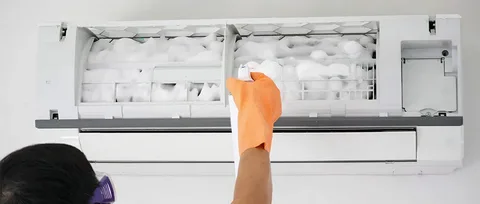
Living in Singapore means relying on your air conditioning unit almost every single day of the year. The tropical heat and high humidity make a functional cooling system not just a luxury but an absolute necessity for comfort and sleep. However, many homeowners overlook a critical aspect of maintenance until something goes wrong: regular and thorough aircon cleaning. In a Singapore home, where units often run for twelve to sixteen hours daily, dust, mold, and moisture accumulate faster than anywhere else. Understanding when your system is crying out for professional attention can save you from expensive repairs, high electricity bills, and even health issues related to poor indoor air quality. This article will walk you through the unmistakable signs that your air conditioner needs immediate servicing, the science behind why Singapore homes are particularly vulnerable, and how a deep clean restores performance to factory-like levels.
Most homeowners assume that simply wiping the front grille or washing the reusable filter every few months is sufficient. Unfortunately, that is far from the truth. The internal components of a split-type or window unit, such as the blower wheel, evaporator coils, and drain pan, harbor hidden contaminants. Because Singapore’s climate is consistently warm and wet, these parts become breeding grounds for bacteria and mold spores. When you neglect a professional aircon cleaning, Singapore home environments quickly become polluted with airborne particles that recirculate every time the fan turns on. Over time, this degrades the system’s ability to extract heat from your rooms, forcing the compressor to work harder and consume more energy. By recognizing the early warning signs, you can take proactive steps to extend the lifespan of your equipment while ensuring that every member of your family breathes cleaner, healthier air.
The Hidden Danger Lurking Inside Your Singapore Home Air Conditioner
Many people do not realize that their air conditioning system is essentially a complex machine that dehumidifies and cools the air by pulling it across freezing cold coils. As air passes through, it leaves behind dust, pollen, pet dander, and microscopic dirt particles. In a typical Singapore home, where windows are often sealed to keep heat out, indoor air pollution can be two to five times higher than outdoor levels. The cooling fins and fan blades inside your unit act like a sticky trap, accumulating a sludge-like mixture of moisture and grime. When this layer becomes thick enough, it insulates the coils, preventing proper heat exchange. This is the primary reason why a unit that used to freeze a room in minutes now struggles to drop the temperature by even a few degrees.
Furthermore, the condensation that naturally forms during the cooling process drains through a narrow pipe. If that pipe becomes clogged with algae or mold, water backs up and leaks from the indoor unit. You might notice water stains on your walls or a puddle forming beneath the blower. This is not just a nuisance; it is a clear indicator that your system is overdue for a chemical overhaul. Professional technicians use high-pressure jets and specialized detergents to dissolve these biological growths without damaging the delicate aluminum fins. For a Singapore home running multiple units, scheduling a routine aircon cleaning every three to four months prevents these blockages from becoming catastrophic failures. Ignoring this reality will eventually lead to a burnt-out compressor, which costs more to replace than the original unit itself.
How Often Should a Singapore Home Schedule Professional Cleaning?
The frequency of professional maintenance depends heavily on usage patterns and household conditions. In a standard Singapore home where the air conditioner runs for eight to ten hours nightly, a thorough cleaning every four months is the industry gold standard. However, if you have pets that shed fur, family members with asthma or allergies, or if you live near a major road construction site, you might need to increase that to once every three months. Light users who only turn on the unit during the hottest afternoons might stretch to six months, but going beyond that without any inspection is risky. The reason is that Singapore’s humidity never drops below seventy percent for most of the year, which means that even infrequent use leads to moisture retention inside the drain pan and blower housing.
When you invest in a professional aircon cleaning, Singapore home specialists will typically perform a twelve-step process. This includes disassembling the unit, washing the evaporator coils with a biodegradable chemical solution, flushing the drainage pipe with anti-bacterial agents, sanitizing the blower wheel, and cleaning the air filter thoroughly. They will also check the refrigerant levels and test the temperature differential between the return and supply air. A healthy unit should produce air that is twelve to fifteen degrees Celsius cooler than the room temperature. If your system falls short of that benchmark despite appearing to function normally, hidden dirt is likely the culprit. Regular cleaning not only restores cooling power but also eliminates musty odors that often develop in neglected systems.
Sign One: Weak Airflow Even at Maximum Fan Speed
One of the most frustrating experiences for any homeowner is standing directly under an air conditioning vent set to the highest fan speed, yet feeling only a faint breath of air. This is a classic symptom of a blower wheel that has become caked with dust and lint. The blower wheel is a cylindrical fan with multiple vanes that pushes cooled air into the room. Over time, these vanes accumulate a felt-like layer of debris that reduces their aerodynamic efficiency. Instead of moving four hundred cubic feet of air per minute, a dirty wheel might only push two hundred. That reduction means your room takes twice as long to reach the desired temperature, leading to longer run times and increased electricity consumption.
In many cases, homeowners mistakenly believe that the fan motor is failing or that the capacitor needs replacement. While those components can indeed fail, the vast majority of weak airflow complaints are resolved by a deep aircon cleaning. Singapore home environments with open kitchens or frequent frying produce airborne grease particles that bond with dust, creating a sticky residue that is difficult to remove with simple vacuuming. Professional cleaning involves removing the blower wheel from the unit and scrubbing each vane individually with a soft brush and coil cleaner. After this process, the airflow often returns to better-than-new condition because the wheel was likely dirty since the first year of operation. If you notice that some parts of the room stay warm while others are cold, uneven airflow distribution is another red flag pointing to a dirty blower assembly.
Sign Two: Water Leakage from the Indoor Unit
Discovering water dripping from your air conditioner onto your wooden floor or expensive sofa is a moment of pure panic. Water leakage is not only damaging to your home’s interior but also indicates that the condensate drainage system is compromised. As your air conditioner cools the air, it also removes humidity, producing several liters of water per day. That water is supposed to flow smoothly through a drain hose to an external outlet. However, when a slimy mixture of mold, algae, and dust builds up inside the drain pan or the narrow hose, the water has nowhere to go. It eventually overflows the pan and leaks out through the lowest point of the unit, typically the front grille or side seam.
For a Singapore home, this problem is particularly prevalent because the warm and moist outdoor air encourages rapid algae growth inside drain lines. Many newer homes have drainage pipes that run through false ceilings, making a clog difficult to detect until water stains appear on the ceiling boards. A professional aircon cleaning service will use a wet-dry vacuum or a specialized drain line gun to blast compressed air and flush out the clog. They will also pour anti-bacterial tablets or liquid solutions into the drain pan to inhibit future growth. Never attempt to clear a deep clog by blowing into the drain tube with your mouth or using a wire hanger, as these methods can puncture the soft plastic pipe. If you see water leaking, schedule a cleaning immediately to prevent mold growth inside your walls and ceilings, which can cost thousands to remediate.
Sign Three: Unpleasant Musty or Sour Smells When the AC Runs
The moment you turn on your air conditioner, you should be greeted by fresh, neutral-smelling air. If instead you notice a musty, sour, or even rotten-egg odor, your system is harboring biological contaminants. The evaporator coil, which operates at near-freezing temperatures, is constantly wet from condensation. In a dark, damp environment, mold and bacteria flourish within forty-eight hours. When the fan starts, it blows these microbial particles and their volatile organic compounds directly into your living space. Breathing these spores can trigger allergic reactions, sinus congestion, and asthma attacks, especially in children and the elderly.
A thorough aircon cleaning Singapore home service addresses this issue by applying a specialized foaming coil cleaner that lifts embedded grime and kills mold spores on contact. After rinsing, the technician may apply an anti-microbial coating that prevents regrowth for several months. However, if the smell persists after cleaning, the problem might be deeper, such as mold growing inside the insulation foam of the unit casing or within the ductwork. In such cases, a more intensive chemical overhaul or even UV-C light installation might be necessary. Do not try to mask the odor with air fresheners or scented sprays, as these chemicals can coat the coil and actually worsen the problem by creating a sticky surface that attracts more dust. The only long-term solution is to remove the source of the smell through professional disassembly and cleaning.
The Health Benefits of a Deep Aircon Cleaning for Your Family
Beyond comfort and energy savings, the most compelling reason to maintain a strict cleaning schedule is respiratory health. Singapore has one of the highest rates of childhood asthma in Southeast Asia, and indoor air quality is a major contributing factor. When an air conditioner recirculates dirty air, it traps pollutants inside your home instead of exhausting them. Dust mites, mold spores, and bacteria accumulate in your carpet, bedding, and upholstery over time. Children who spend most of their day indoors are especially vulnerable because their lungs are still developing. Studies have shown that homes with professionally cleaned AC units at least twice per year have significantly lower concentrations of airborne allergens compared to homes with neglected systems.
Additionally, the Singapore government’s National Environment Agency has highlighted that poorly maintained air conditioners can become reservoirs for Legionella bacteria, which causes a severe form of pneumonia. While rare, the risk increases when water stagnates in drain pans for weeks. A professional aircon cleaning Singapore home service includes a full drain pan disinfection and water flow test to ensure no standing water remains. For families with elderly members or those undergoing chemotherapy, this level of cleanliness is not optional but essential. By viewing regular cleaning as a health investment rather than a maintenance cost, you protect your loved ones from invisible threats while enjoying better cooling performance.
Sign Four: Ice Formation on the Copper Pipes or Outdoor Unit
Seeing ice on your air conditioner on a sweltering Singapore afternoon might seem paradoxical, but it is actually a sign of serious trouble. Ice forms when the evaporator coil becomes so dirty or restricted that the refrigerant cannot absorb enough heat. The coil temperature drops below freezing, and the humidity in the air freezes upon contact. Initially, you might notice frost on the larger copper pipe connecting the indoor and outdoor units. If left unchecked, a solid block of ice will encase the entire coil, completely blocking airflow and causing the compressor to run continuously until it overheats and shuts down. By the time you see ice, your system is already operating at dangerously low efficiency.
The root cause is almost always a lack of proper aircon cleaning. Singapore home units that run continuously without maintenance accumulate a dense mat of dust on the coil surface. This acts as an insulating blanket, preventing heat transfer. The refrigerant stays too cold, and ice forms. Some homeowners mistakenly turn off the unit and let the ice melt, thinking the problem is solved. However, once the ice melts, the underlying dirt remains, and the cycle repeats within days. A professional cleaning will remove the dust layer, allowing the coil to operate at its designed temperature range of around four to seven degrees Celsius. Never attempt to scrape ice off the coil with a sharp object, as the aluminum fins are extremely delicate and will bend, causing permanent damage. Instead, turn off the unit and call a technician who can perform a proper chemical wash.
Sign Five: Rising Electricity Bills Without Increased Usage
One of the most deceptive aspects of a dirty air conditioner is that it continues to run and cool, but it does so inefficiently. You might not notice a dramatic drop in temperature, so you assume everything is fine. However, your monthly electricity bill tells a different story. The Singapore Power Group reports that air conditioners account for forty to fifty percent of a typical home’s electricity consumption. When the evaporator coil is dirty, the compressor has to run longer and work harder to achieve the same cooling effect. A mildly dirty coil increases energy use by ten to fifteen percent, while a severely neglected coil can cause a thirty to forty percent spike.
For a typical Singapore home running two air conditioners for ten hours daily, that excess consumption can add fifty to one hundred dollars to your monthly bill. Over a year, that is enough to pay for three professional cleanings and still have money left over. When you schedule a routine aircon cleaning, Singapore home technicians also check the refrigerant charge and clean the outdoor condenser coil, which further improves efficiency. A clean system can achieve its set temperature faster and then cycle off, saving significant energy. If you have noticed a steady increase in your utility bills despite unchanged usage patterns and outdoor temperatures, a deep cleaning is the most cost-effective solution before considering a replacement unit.
Sign Six: The AC Runs Constantly But Never Reaches the Set Temperature
Have you set your remote to twenty-two degrees Celsius, yet after two hours, the room still feels clammy and warm? This is a clear indication that your cooling capacity has been severely compromised. Every air conditioner is rated for a specific cooling output measured in British Thermal Units (BTUs). A three-year-old unit that has never been professionally cleaned may only deliver sixty percent of its original BTU rating. The thermostat senses that the room is still warm, so it keeps the compressor running continuously. This leads to excessive wear on the compressor’s internal valves and the fan motor bearings, drastically shortening the unit’s lifespan.
The primary culprits are a dirty evaporator coil and a clogged air filter. When the coil is coated with grime, the refrigerant inside cannot absorb enough heat from the room air. The air that blows across the coil only drops by five or six degrees instead of the expected twelve. You might feel slightly cool air coming from the vents, but it is nowhere near cold enough to overcome the heat load from sunlight, electronics, and body heat. A professional aircon cleaning Singapore home service restores the coil’s heat absorption capability, allowing the unit to achieve the set temperature efficiently. After cleaning, you will likely find that you can set the thermostat two or three degrees higher and still feel more comfortable, leading to additional energy savings.
Sign Seven: Unusual Noises Like Rattling, Squealing, or Hissing
Modern air conditioners are engineered to operate quietly, producing only a gentle whoosh of air. Any sound that deviates from this baseline is a warning sign. A rattling noise typically indicates that a foreign object, such as a dried leaf or a piece of broken plastic, has entered the blower housing. More commonly, the blower wheel itself may have become unbalanced because dirt has accumulated unevenly on its vanes. As the wheel spins at high speed, the imbalance causes it to wobble and tap against the housing, producing a rhythmic clicking or rattling. A squealing noise suggests that the indoor fan motor bearings are drying out or that the blower wheel is scraping against a dirty buildup.
A hissing sound, on the other hand, could point to a refrigerant leak, which is a separate issue requiring immediate attention. However, in many cases, what sounds like hissing is actually air forcing its way past a partially blocked filter or through a crack in the drain pan. During a comprehensive aircon cleaning, Singapore home specialists will disassemble the unit and inspect every moving part. They will lubricate bearings, tighten loose screws, and remove any debris causing noise. Ignoring these sounds will eventually lead to a seized fan motor, which can burn out the main control board due to excessive current draw. If your air conditioner is louder than it used to be, do not wait for a complete breakdown; schedule a cleaning and inspection promptly.
What to Expect During a Professional Aircon Cleaning Session
For homeowners who have never hired a professional service, the process can seem mysterious. A reputable technician will arrive with a portable water containment bag, a high-pressure pump, chemical cleaning solutions, a steam cleaner, and various brushes. The first step is to turn off the circuit breaker to ensure safety. The technician then removes the front cover, air filter, and electronic control panel cover. The blower wheel and evaporator coil are exposed, and the containment bag is fitted underneath to catch dirty water. A coil cleaner is sprayed onto the evaporator fins and allowed to dwell for several minutes to break down grease and biological growth.
Next, a pressure washer with adjustable settings is used to rinse the coil and blower wheel thoroughly. The dirty water flows into the containment bag and then into a bucket for disposal. The drain pan is scrubbed, and the drain line is flushed with a high-pressure gun. After reassembly, the technician runs the unit for fifteen minutes to check for proper drainage, temperature drop, and airflow. Finally, the air filter is either replaced or washed and dried. A thorough job takes forty-five to sixty minutes per unit. Avoid companies that offer a fifteen-minute “fast clean,” as they are likely only wiping the exterior or using compressed air to blow dust deeper into the unit, which worsens the problem over time.
The Cost of Neglect vs. The Value of Prevention
Many homeowners delay aircon cleaning because they view it as an unnecessary expense. However, the cost of neglect is substantially higher. Replacing a failed compressor can cost six hundred to one thousand dollars, while a new condenser fan motor runs two hundred to four hundred dollars including installation. A refrigerant leak repair can exceed eight hundred dollars. By contrast, a standard aircon cleaning Singapore home service costs between sixty and one hundred twenty dollars per unit, depending on the type of cleaning (chemical wash versus chemical overhaul). If you have three units in your home, spending three hundred dollars per year on cleaning can prevent a fifteen-hundred-dollar repair in the third or fourth year.
Furthermore, a well-maintained unit lasts twelve to fifteen years, while a neglected unit often fails after six to eight years. Replacing an entire multi-split system can cost three thousand to six thousand dollars. The math is clear: investing in regular professional cleaning generates a return on investment of several hundred percent by delaying replacement and reducing electricity bills. Additionally, a clean unit maintains its cooling capacity, meaning you do not need to oversize your next system to compensate for inefficiency. When you factor in the health benefits of mold-free air, the case for proactive maintenance becomes overwhelming.
Frequently Asked Questions About Aircon Cleaning in Singapore Homes
How long does a professional aircon cleaning take for a typical Singapore home?
A thorough chemical wash for a single split-type unit takes approximately forty-five to sixty minutes. This includes full disassembly, coil cleaning, drain flushing, sanitization, and reassembly. If you have three units in your home, expect the entire process to take around three hours. Some companies offer express cleaning in twenty minutes, but those services only clean the filter and wipe the exterior, which does not address internal mold or dirt buildup. Always choose a service that guarantees a minimum of forty-five minutes per unit for a genuine deep clean.
Can I perform aircon cleaning myself to save money, or must I hire a professional?
You can safely clean the washable air filter every two weeks using a soft brush and mild soap, which helps maintain airflow. However, accessing the evaporator coils, blower wheel, and drain pan requires specialized tools like a coil cleaner solution, a pressure pump, and a containment bag. Attempting to DIY a full cleaning often damages the delicate aluminum fins or dislodges internal wiring. For a Singapore home, professional cleaning is strongly recommended every three to four months because the high humidity accelerates mold growth in areas you cannot reach or see without disassembly.
What is the difference between a chemical wash and a chemical overhaul?
A chemical wash involves cleaning the evaporator coil and blower wheel while the unit remains mounted on the wall. The technician uses a spray-on cleaner and a low-pressure rinse, which is sufficient for moderate dirt. A chemical overhaul, also known as a full strip-down service, requires removing the entire indoor unit from the wall bracket. The technician dismantles every component, including the blower housing and drain pan, and soaks them in a chemical bath. This is necessary when you have not cleaned the unit for over twelve months or if you notice persistent mold smells or water leakage. The overhaul costs about thirty to fifty percent more but restores the unit like new.
Will regular aircon cleaning reduce my electricity bill in a Singapore home?
Yes, significantly. A dirty evaporator coil forces the compressor to run thirty to forty percent longer to achieve the same cooling. By restoring the coil’s heat transfer efficiency, professional cleaning reduces compressor run time, lowering your monthly bill by ten to twenty percent. For a household that spends one hundred fifty dollars monthly on AC electricity, that translates to fifteen to thirty dollars in savings per month. Over a year, the savings often exceed the total cost of the cleaning services, making it a financially positive decision. Many homeowners report that the electricity bill reduction alone pays for their cleaning within two to three months.
How do I choose a reliable aircon cleaning company in Singapore?
Look for companies that are CaseTrust accredited or have at least four and a half stars on Google Maps with over two hundred genuine reviews. Avoid contractors who quote aggressively low prices like twenty-five dollars per unit, as they often use unsafe chemicals or skip critical steps like drain flushing. Ask specifically whether they include dismantling the blower wheel and washing it separately. A reputable company will provide a before-and-after photo report of the evaporator coil and blower wheel. Also verify that they carry public liability insurance, because accidental water damage during cleaning can ruin your flooring or ceiling. Never pay in full upfront; a small deposit is acceptable, with the balance due after you verify that the unit drains properly and cools effectively.







Leave a Reply